How to Import Liquidation Pallets Internationally: Freight, Customs, and Landed Cost
September 15, 2025 · By Liquidation Stock Direct Team
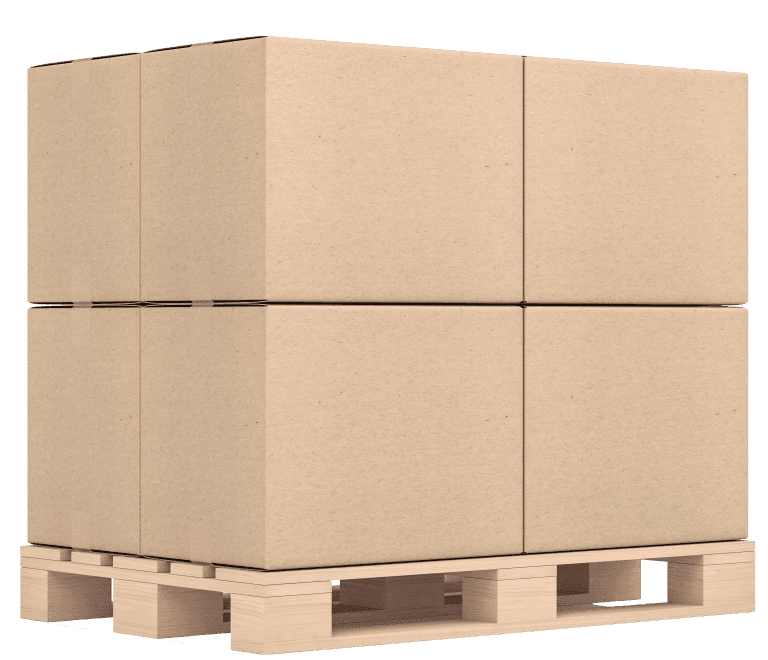
The objection I hear most from buyers in Lagos, São Paulo, and Dubai goes like this: importing a US liquidation pallet sounds like more customs paperwork and freight cost than the goods are worth. Fair concern. It is also usually wrong, once you run the actual numbers instead of guessing at them. The thing that scares people off is rarely the freight bill itself. It is not knowing what the box finally lands at per unit, and not having a freight forwarder set up to move it from a US warehouse to your door. This guide fixes both, with real line items you can plug into your own spreadsheet.
A US-sourced pallet has one big advantage for an overseas reseller: the goods were priced for the American clearance market, not your local one. That gap is where your margin lives. But the gap only survives if your import chain is tight. Sloppy forwarding and a surprise duty bill can erase it in a single shipment. So let me walk the whole chain, from our dock to your shelf.
Why a Freight Forwarder Is Your First Hire
Before you buy a single pallet, line up a freight forwarder. Not a carrier, a forwarder. The difference matters. A carrier moves a box on one leg. A freight forwarder is the operator who books the space, consolidates your goods, prepares export documents, coordinates the ocean or air leg, and hands your shipment to a customs broker on the other side. For a first-time importer, the forwarder is the single most useful relationship you will build, because they turn a dozen moving parts into one invoice and one point of contact.
Most international buyers use a US-based forwarder with a receiving warehouse. You ship the pallet to that US address, they hold and consolidate it, and they arrange the international move. This is exactly why we are freight-forwarder friendly: you give us the forwarder's US warehouse as the ship-to, and the domestic leg is a normal stateside shipment. No dock at your end required.
Two forwarder details to nail down before you commit:
- Consolidation. If you plan to buy more than one pallet over a few weeks, a forwarder can hold and combine them into a single ocean container slot. One consolidated shipment beats three separate ones on both freight and clearance fees.
- Incoterms. Agree on who owns the goods at each step. Most liquidation buyers keep it simple and take ownership at the US warehouse, which in Incoterms language sits close to Ex Works (EXW): the pallet is yours the moment it leaves our dock, and the forwarder carries the risk on every leg after. Whatever you settle on, get it in writing so nobody argues over who eats a crushed box six weeks later.
The Handoff: From Our Dock to Your Forwarder
The domestic US leg is where a lot of new importers overpay without noticing. You have two clean options.
The first is standard LTL freight to the forwarder's warehouse. This is the default for a full pallet, and the cost swings on weight, distance, and accessorials. If LTL is new to you, the accessorial charges and how to dodge them are covered in our guide to LTL freight for pallet buyers. Read it before you book, because a residential or liftgate fee you did not expect can add $60 to $150 to a shipment.
The second option, and often the cheaper one for a single pallet, is our Pallet Breakdown Service. Instead of moving one heavy palletized unit on freight, we split the pallet into individually boxed, ground-shipped parcels sent straight to your forwarder. For buyers without their own dock, this frequently lands faster and cheaper than LTL, because you skip freight-class pricing and pay simple parcel rates. Run both quotes and take the lower one.
Customs Clearance and Duties: What You Actually Owe
Here is the part people dread, and it is more predictable than it looks. Customs clearance in your country hinges on three numbers: the declared value of the goods, the HS (harmonized system) code for what is inside, and your country's duty rate for that code.
Manifested lots make this easy. When a pallet ships with a published manifest, you have an itemized declared value and a clear read on product categories, which your customs broker uses to classify the goods and calculate duty. Quote-only mystery loads are harder to declare cleanly, so for your first few imports, favor manifested lots specifically because they smooth clearance.
Duty is charged as a percentage of the customs value, and that value is usually calculated CIF, meaning cost of goods plus international insurance plus freight. Rates vary widely by product and country. A single mixed pallet can straddle several HS chapters at once: electronics typically land in chapter 85, cosmetics and fragrance in chapter 33, apparel split between chapters 61 and 62. Each of those can carry its own duty rate, and a few categories add requirements beyond duty, such as labeling rules on cosmetics or safety documentation on electronics. This is where a manifest earns its keep, because your broker can pre-classify each line instead of guessing at the port. On top of duty, most countries add an import VAT or GST, commonly in the 10 to 20 percent range, charged on the CIF-plus-duty total. The good news: if you are a VAT- or GST-registered business, that import tax is often reclaimable, so it is a cash-flow line, not a permanent cost. Confirm with a local accountant before you assume it back.
Landed Cost, Line by Line
This is the number that actually decides whether an import works: landed cost per unit, not the sticker price of the pallet. Here is an illustrative breakdown for a general merchandise pallet declared at $500 with roughly 150 sellable units, moved by ocean LCL to a mid-distance market. Your real figures will differ, but the shape holds.
| Line item | Example cost |
|---|---|
| Pallet price (at US warehouse) | $500 |
| US domestic leg to forwarder | $120 |
| Forwarder handling / consolidation | $45 |
| International freight (LCL share) | $180 |
| Cargo insurance (~2% of value) | $17 |
| Import duty (example 10% of CIF) | $82 |
| Customs broker / clearance fee | $90 |
| Last-mile delivery to you | $60 |
| Total landed (before recoverable VAT) | $1,094 |
Spread $1,094 across 150 units and your landed cost is about $7.29 per unit. That is the number to price against, not the $3.33 per unit the raw pallet price implied. Notice that the goods themselves are under half the total. On an import, logistics and duty are the swing factors, which is exactly why buying a bigger consolidated shipment matters: most of those line items barely move whether you send one pallet or four, so the per-unit cost drops fast as you add volume.
Do not eyeball this. Plug your own duty rate, freight quote, and unit count into our landed cost calculator and let it tell you the true per-unit figure before you commit. If the landed cost still leaves room under your local resale price, you have a deal. If it does not, walk, or switch to a denser, higher-value category where freight is a smaller share of the total.
How to Import From USA Without Torching Your Margin
A few habits separate importers who scale from importers who quit after one bruising shipment.
Start with one pallet, not a container. There are no forced high minimums on many lots, so use your first import as a live test of your whole chain: forwarder, broker, duty rate, and last-mile. Measure everything. Your second shipment will be priced by people who know their numbers cold instead of hoping.
Favor manifested lots and higher-value-per-kilo categories early. A pallet of dense, low-value goods gets punished by freight; the same freight bill on cosmetics or electronics is a smaller slice of landed cost. The written 95% sellable guarantee on lots also protects your downside while you are still learning which categories move in your market.
And keep the paperwork boring. Accurate declared values, clean manifests, and a broker who knows your product codes are what keep clearance from turning into a delay. If you want the full ordering and quote walkthrough, the how to buy page lays out each step and the email quote.
Start Small and Prove the Chain
Importing US liquidation is not the wall it looks like from the outside. It is a chain of known costs you can price to the unit before you spend a dollar. Line up a forwarder, pick a manifested lot, run the landed cost, and ship one pallet to see your real numbers. When they work, scale the volume, not the risk. Browse the full catalog of available lots and send a quote request for the categories that fit your market, and we will help you get the first box moving.
Ready to source your next lot?
Browse fresh liquidation lots and pallets, ready to ship.


